Play for the Black Box
Using critical play to create awarness towards data privacy issues
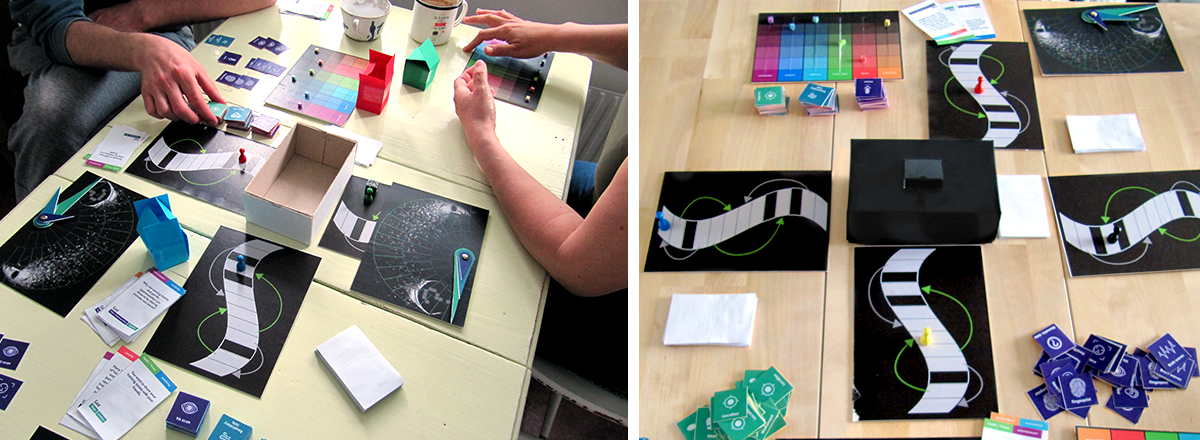
Play for the Black Box is a critical Interaction Design project that explores how playful, tangible interaction can raise awareness towards data privacy. In form of a tabletop game, the project translates abstract data-privacy mechanisms into an experience that helps users to reflect on data ownership, surveillance and control. Furthermore, the project aims to teach users/players more about the difference between private data, biosignals, and biometric data.
Focus
Research project and Master thesisTools
Exel, pen & paper, Photoshop, Sketch, Camera, OpenBCI KitMethods
Interviews, Surveys, Desktop research and analysis, Prototyping, PlaytestingYear / Duration
2020 / 2 monthMaterial
Context & Problem
Biometric data and biosignals are
increasingly embedded in everyday
technologies, from
fitness trackers to authentication systems.
While these systems promise convenience,
health
insights, and personal optimisation, the
processes of data collection, storage, and
reuse
remain largely invisible to users. Consent
is often reduced to legal agreements and
perceived as mandatory rather than optional.
Users feel powerless and poorly informed
about
how their data is used, leading to a growing
gap between data sharing and data
awareness.
This project is situated at the intersection
of Interaction design, data privacy, and
critical play, exploring how playful,
physical interaction can be used to help
people
critically reflect on the collection, use,
and ownership of biometric data, and their
own
role within data-driven systems.
Research question:
How can critical play in the form of an activist game raise awareness of the issue of data privacy and encourage critical reflection on one’s own behaviour with personal data?Design Process
This project followed a human-centred design
process structured around the phases
Empathise,
Define, Ideate, Prototype, and Playtest,
moving from research and analysis toward
experimentation and implementation.
Research Phase 1 – Biosignals, Self-Tracking & Awareness
The project began with an exploration of how biosignals and biometric data could be represented in more physical and experiential ways, rather than through abstract numbers and graphs. The goal was to foster mindfulness and embodied awareness, while also questioning how sharing personal body data in real time impacts perceptions of privacy and control.Research methods included desktop research, a survey, and a self-tracking experiment. Results showed that most participants regularly use fitness or health-tracking devices and value them for performance improvement, health monitoring, and self-understanding. However, concerns emerged around over-reliance on data, misinterpretation, and unease about data storage, monetisation, and long-term use. While many participants were willing to share data for medical benefits, this willingness was highly context-dependent and often accompanied by discomfort about who ultimately profits from the data.
Research Phase 2 – Data Privacy & Surveillance
The second research phase focused more explicitly on personal data, biometric identifiers, and data protection, extending into themes of surveillance capitalism and data as a commodity. Unstructured interviews revealed a wide spectrum of attitudes, from highly privacy-conscious individuals to those largely unconcerned.Across all interviews, participants generally understood what private data is but had limited knowledge of biometric data classifications and GDPR specifics. Many expressed feelings of powerlessness, frustration with opaque consent systems, and a lack of meaningful choice. Data consent was often seen as unavoidable for participation in modern social and digital life, reinforcing a sense that once data is collected, it cannot truly be reclaimed or deleted.
From Research to Concept
Insights from research were mapped and
synthesised, categorising biometric data
into physical
and behavioural identifiers and identifying
key application areas such as security,
healthcare, fitness, entertainment, and art.
Initial experiments with biosensors informed
technical feasibility, but practical
constraints (including COVID-19) led to a
shift away
from wearable devices and real-world data
towards exemplary represented biosignal
data.
This phase introduced the central metaphor
of the “black box” as a way to communicate
the
hidden processes of data collection and
exploitation.
- Users provide data → data disappears into a system
- Internal processes are hidden
- Value is extracted, but control is unclear
Solution
Using the framework of critical play, the
concept evolved into an activist tabletop
game,
where players must make decisions that
mirror real-life data-sharing behaviour in
order to
progress.
Personal data , in form of game tokens, is
represented as a physical resource and
functions
as game currency. Players must trade this
data in order to gain advantages,
improvements, or
convenience. The collected data disappears
into a central “black box,” which stands for
opaque data infrastructures and loss of
control over data by users. The goal is to
gain
access to, or ownership of all collected
data.
- Encourage shared reflection anddiscussion
- Make invisible systemsphysically present
- Shift consent from passiveparticipation
- Power imbalances
- The commodification of personal data
- The emotional impact of giving up control
Game components

Action cards: Describing a use case, costs of data, information on who needs to pay, motivation categories
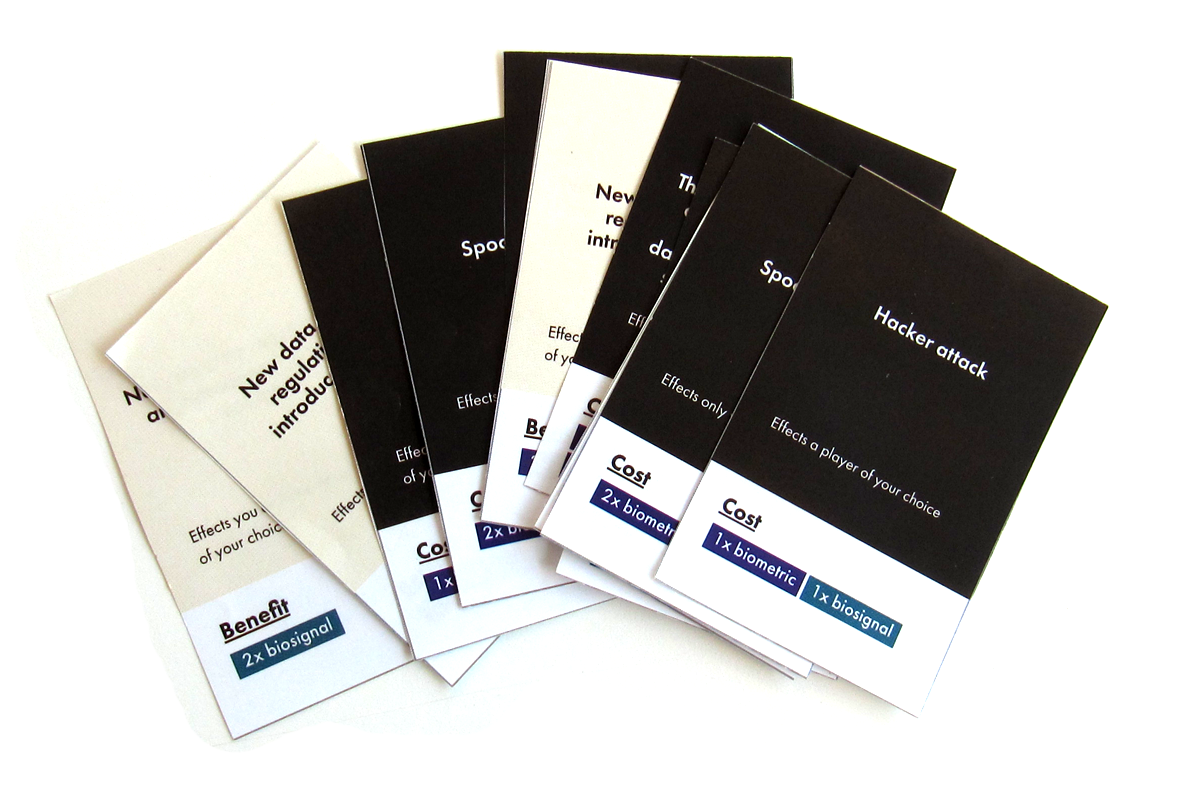
Event cards: Event description, costs of data or benefit (return of data), information on who is effected
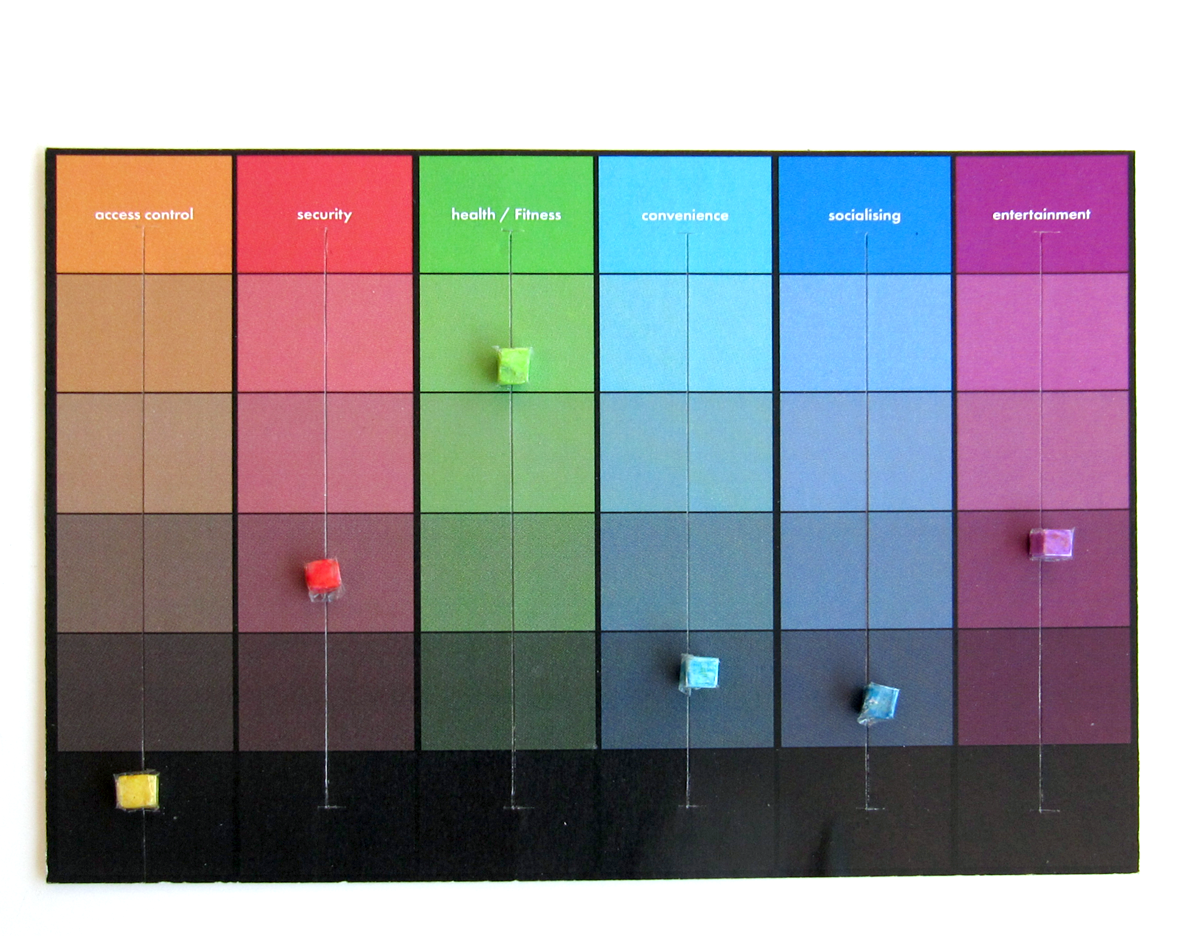
Motivation categories: Categorised in access control, security, health/fitness, convenience, socialising and entertainment
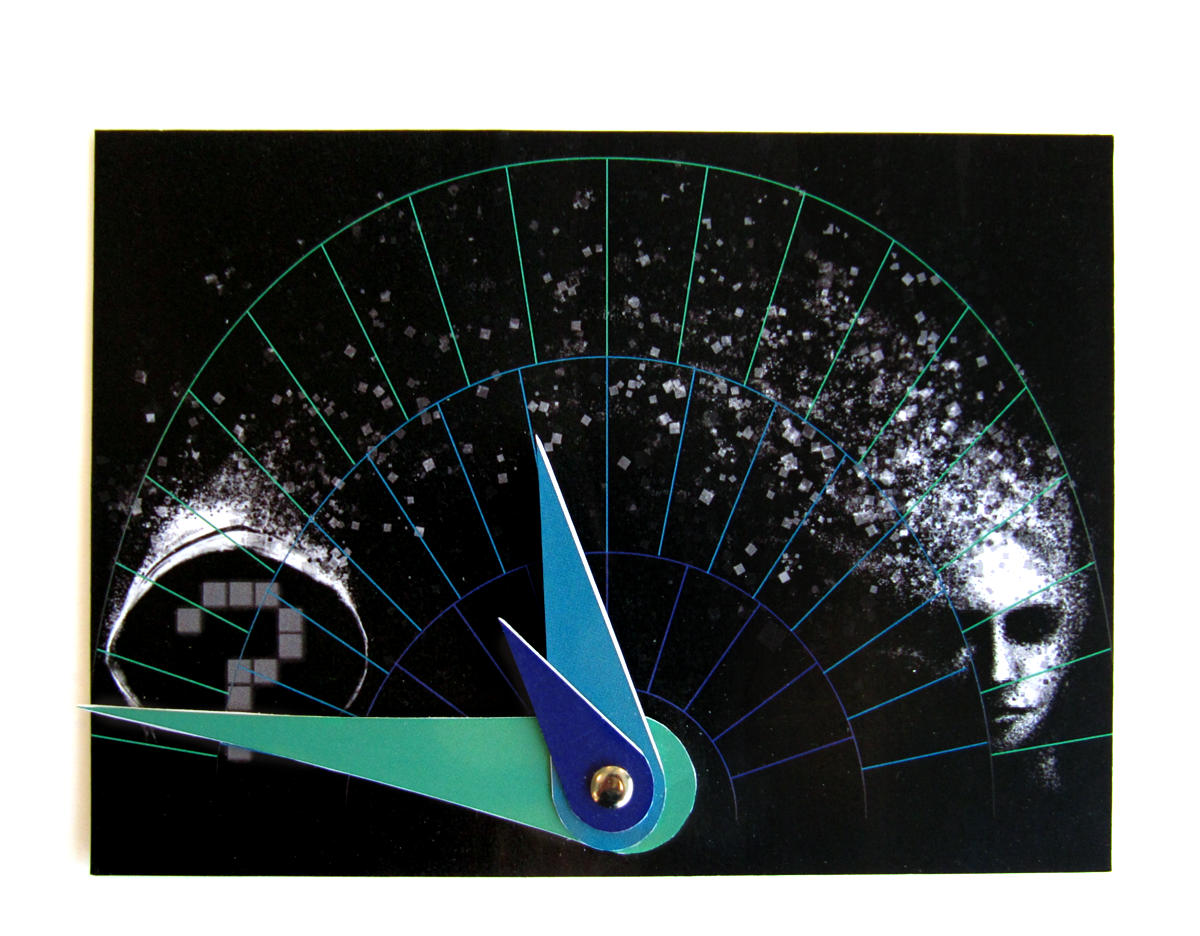
Digitalisation meter: Meter going from “Anonymous” to “Digital doppelgänger”, separated in three scales, one for each type of data
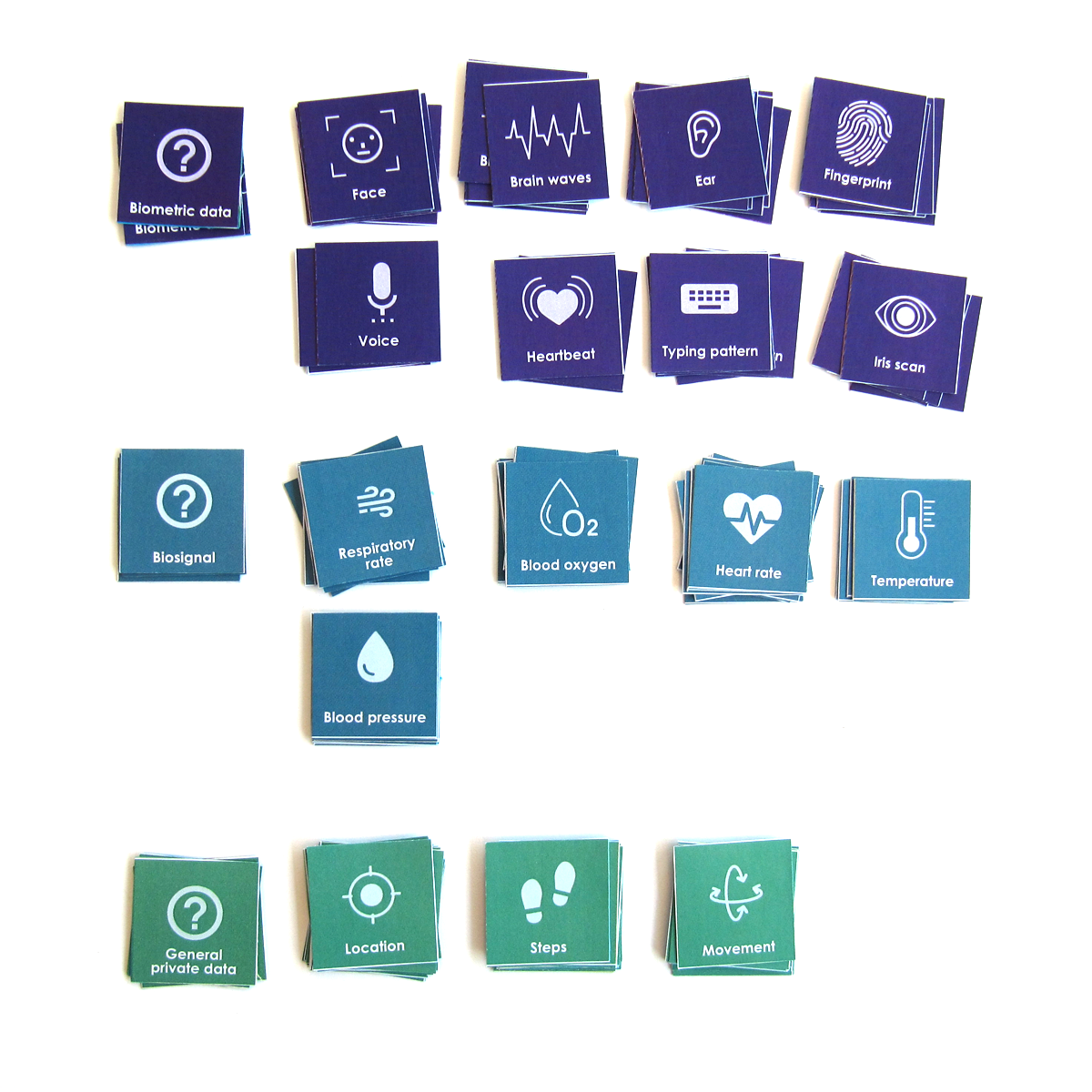
Data token: Colour coded and categoriesed into biometric data, biosignals and general personal data
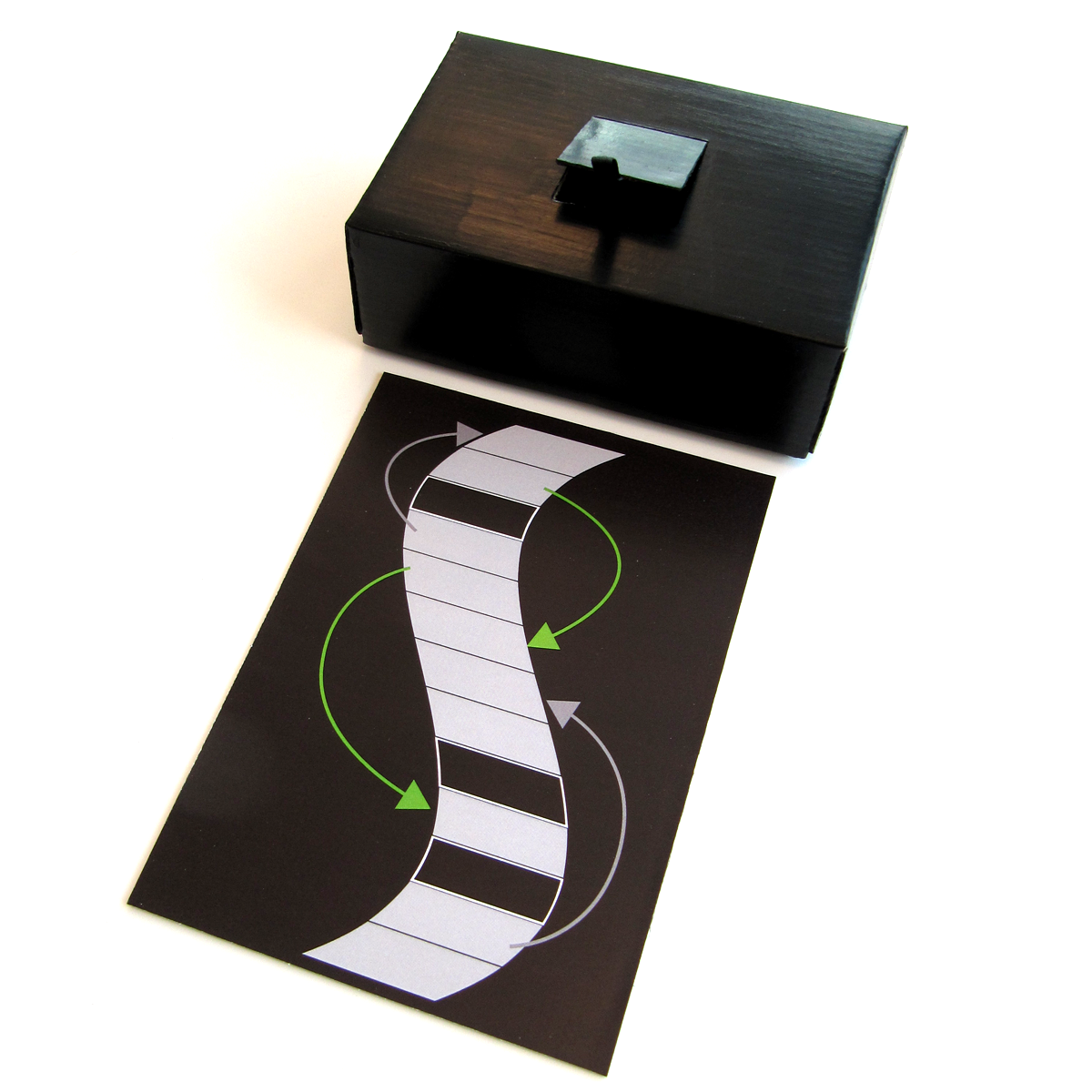
Game board & Black Box: Game board with up and down connections and marked fields for event cards. Black Box in which all the data tokens need to be “payed”
Game Play
Goal of the game
Players must decide when, why, and how much personal data to share in order to gain benefits—while avoiding the loss of control over their digital identity.The game ends when one player has fully maxed all motivation categories.
The winner is the player who owns the most data at the end.
Design Intention
- There is no "correct" way to play
- Reflection emerges through decision-making and discussion
- The mechanics simulate real-world trade-offs between benefit, convenience, and privacy
- The game prioritises awareness over competition
Setup
- 1. Each player
receives:
◦ A game board
◦ A motivation category board
◦ A digitalisation meter
◦ A set of data tokens
◦ A player token
- 2. Place the Black Box in the centre of the table.
- 3. Shuffle Action Cards and Event Cards into separate decks.
- 4. Each player starts with three Action Cards in hand.
- 5. All digitalisation meters start at zero.
Turn Structure
Each turn consists of three phases:1. Draw
The player draws one Action card
2. Play or Discard
The player chooses to play or discard one action card from their hand
If the card is played, the player must:
• Pay the required data tokens into the Black Box
• Advance the relevant motivation category (player stat)
• Move the corresponding digitalisation meter(s) forward
If a card belongs to only one motivation category, that category advances two steps.
If the card is discarded:
• No data is paid
• The relevant digitalisation meter(s) move backwards by the amount of data that would have been paid
! Some Action Cards are marked mandatory and cannot be discarded.
Motivation Board
- Health & wellbeing
- Convenienc
- Security
- Entertainment
- Social participation
- The corresponding category is levelled up
- If a card belongs to only one category, that category is levelled up by two steps
The Black Box
- All paid data tokens go into the Black Box
- Players cannot see or access data once it is inside
- When a player reaches the Black
Box:
- They collect all data currently inside
- Their player token returns to the start of their game board
- The game continues
Digitalisation meter (Losing Condition)
If a p layer reaches the end of any data scale on the digitalisation meter, it means:- Enough data has been collected to create a digital copy of that player
- The player is out of the game
Game End & Scoring
End Condition
The game ends when one player has reached the maximum level in all motivation categories.
Scoring Players count their collected data tokens:
- Biometric data = 3 points
- Biosingnals = 2 points
- General personal data = 1 point